Search
Close this search box.
Used Robots Logo
predictive maintenance Archives - Used Robots

predictive maintenance

WHAT STRATEGIES EXIST TO MINIMIZE DOWNTIME WHEN INTRODUCING ROBOTIC AUTOMATION INTO CONTINUOUS PROCESSES?

When robots become an essential part of operational workflows, unplanned downtime can become one of the most significant sources of productivity loss in automated plants.
System errors, unexpected stoppages, and urgent repairs can delay deliveries and create costly disruptions that negatively affect competitiveness.
Implementing strategies that minimize these downtime events and maximize the operational availability of your robotic systems is crucial.
In this article, we outline the most effective, technically validated practices that help ensure your automation runs continuously and reliably.
👉 Complementary real article from Eurobots on industrial robot maintenance and operation:
HOW TO KEEP AN INDUSTRIAL ROBOT IN OPTIMAL CONDITION
1. Implement a Preventive Maintenance Program
A well‑structured preventive maintenance plan allows you to inspect, calibrate, and replace components before they fail.
Industrial studies show that preventive maintenance can:
Reduce unexpected downtime by 50–75%
Extend the service life of critical components
Lower the costs associated with unplanned repairs
This includes routine checks of lubrication, sensors, motors, and control systems according to the manufacturer’s recommendations and the robot’s actual operational usage.
2. Integrate Data‑Driven Predictive Maintenance
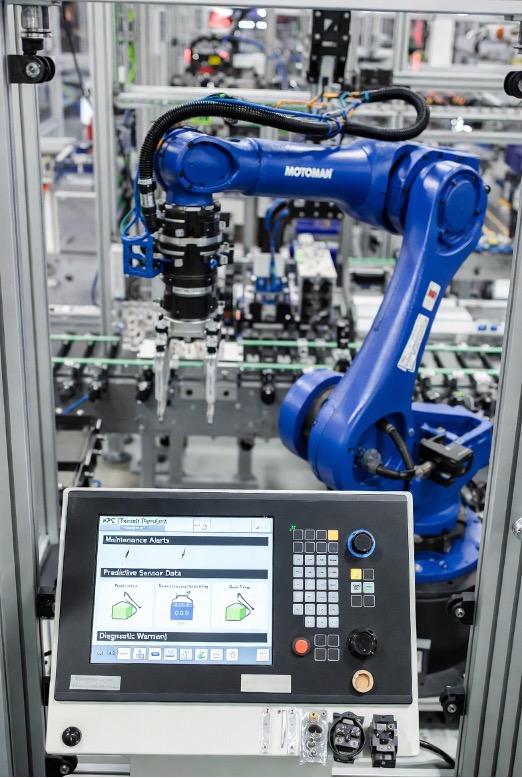
Unlike preventive maintenance (based on time or usage intervals), predictive maintenance uses real‑time data from sensors and equipment status to anticipate failures before they occur.
Technical sources highlight that this approach enables:
Maintenance performed right before it becomes necessary
Turning unexpected stops into planned interventions
Optimizing plant availability in real time
Industrial IoT technologies and data analytics allow detection of degradation trends and help plan service actions without interrupting production.
3. Continuous Training for Technical Staff and Operators
Human expertise remains a key element. A well‑trained team can:
Detect early signs of failure before they escalate into stoppages
Respond quickly to system alarms
Perform basic preventive maintenance without external technicians
Technical training should include fault diagnosis, robot parameter updates, and sensor signal analysis.
4. Spare Parts Management and Internal Logistics
Many prolonged downtime events are caused by the lack of critical spare parts or delays in repair logistics.
An effective strategy includes:
Proper stock of high‑wear components
Classification of spare parts by criticality
Optimized replacement procedures
URC recommends maintaining a minimum inventory of consumables and components with the highest operational wear.
5. Using Integrated Diagnostics and Monitoring Systems
Modern robotic systems include diagnostic tools that:
Monitor operating conditions
Log errors and significant events
Send alerts before major failures
This type of monitoring allows plant managers to anticipate trends and schedule maintenance ahead of time.

6. Designing Systems with Operational Redundancy
In critical applications, redundancy may include:

Backup robots or duplicated modules
Automatic switching systems
Alternative paths within production flows

While this requires a higher initial investment, it significantly reduces the impact of failures in single system elements.

❓ FAQs
What causes most downtime in robotic automation?
The most common causes include mechanical failures, software errors, lack of maintenance, and unavailable spare parts.
How impactful can well‑implemented predictive maintenance be?
It can convert most unexpected stoppages into planned downtime, increasing system availability and reducing total maintenance costs.
Is it expensive to implement these strategies?
Smart maintenance investments are often quickly offset by reduced downtime, longer equipment lifespan, and significantly improved overall productivity.

Checklist to Minimize Downtime
☐ Implement a preventive maintenance plan
☐ Integrate predictive maintenance with data analytics
☐ Train technical staff and operators
☐ Ensure inventory of critical spare parts
☐ Connect diagnostic and monitoring systems
☐ Evaluate operational redundancy for critical processes

WHAT STRATEGIES EXIST TO MINIMIZE DOWNTIME WHEN INTRODUCING ROBOTIC AUTOMATION INTO CONTINUOUS PROCESSES? Read More »

INDUSTRIAL ROBOTICS TRENDS FOR 2026: INTELLIGENCE, MOBILITY & SUSTAINABILITY

Industrial robotics is entering a new era. Robots are no longer just programmable arms repeating tasks—they are becoming connected, mobile, intelligent, and increasingly aligned with sustainability goals. According to the latest report from the International Federation of Robotics (IFR), global demand for industrial robots reached 542,000 installed units in 2024, more than double compared to

INDUSTRIAL ROBOTICS TRENDS FOR 2026: INTELLIGENCE, MOBILITY & SUSTAINABILITY Read More »

DIGITISED ROBOTIC CELLS: THE FUTURE OF INDUSTRY 4.0 IN ACTION

Industry 4.0 is redefining the boundaries of modern manufacturing, and one of its fundamental pillars is advanced robotics. With the introduction of digitized robotic cells, manufacturers are transforming their processes to achieve greater flexibility, efficiency, and productivity. Iconic brands like KUKA, FANUC, ABB, Yaskawa Motoman, and Kawasaki are leading this transformation by integrating advanced solutions in digitalization, artificial intelligence (AI), the Internet of Things (IoT), and digital twins. But how is this new era of robotics impacting factories and the industry in general?

The Convergence of Robotics and Industry 4.0
Digitalization 4.0 has opened up a range of opportunities for robotic cells. These cells, which previously operated in isolation, are now connected to a network of intelligent systems that allow for more efficient management of operations. Through cloud-based platforms and IoT, robots can exchange data in real-time, access remote diagnostics, and perform predictive maintenance, reducing downtime and optimizing production processes.

The adoption of artificial intelligence and the analysis of large volumes of data allow robots to not only be smarter but also more autonomous, capable of adapting to changing conditions and performing complex tasks without human intervention.

KUKA: Innovation in Connectivity and Digital Simulation
KUKA, one of the giants in industrial robotics, has implemented cutting-edge technologies such as the KUKA Sunrise.OS system and the KUKA Connect platform to facilitate the programming, control, and monitoring of its robots. The former, an advanced operating system, allows for intuitive and flexible programming, while the latter, cloud-based, connects robots to a global network for real-time data access. This connectivity facilitates predictive maintenance and improves factory resource management, optimizing production.

Additionally, the integration of digital twins allows KUKA to simulate and optimize production processes before physically implementing them, reducing risks and improving operational efficiency.

FANUC: Pioneers in IoT and Predictive Maintenance
FANUC, another key player in industrial robotics, has adopted the concepts of FANUC FIELD and ROBOTICS+, IoT-based platforms that offer advanced data analysis and predictive maintenance capabilities. These solutions allow operators to manage and monitor robots from anywhere in the world, ensuring performance remains at optimal levels.

The Arc Mate 100iD robots, primarily used for welding applications, are a clear example of how FANUC has integrated Digitalization 4.0 into its robotic cells. Equipped with advanced sensors, these robots can make real-time adjustments to their welding paths, improving the precision and quality of the final product.

ABB: Connectivity and Simulation for Production Optimization
Swiss giant ABB has launched ABB Ability, an industrial IoT platform that connects its robots, controllers, and other machinery to a digitized network for real-time data monitoring. This platform not only facilitates data collection but also allows for robot diagnostics and failure prediction before they occur.

The IRB 6700, one of ABB’s most robust robots, exemplifies how the brand is incorporating advanced digital technologies into its robotic cells. Through ABB Ability, users can access real-time operational data, improving process efficiency and ensuring consistent product quality.

Yaskawa Motoman: Flexibility and Collaboration in Production
Yaskawa Motoman has implemented collaborative robotics solutions with the MOTOMAN HC10, a robot designed to work safely and efficiently alongside humans. Equipped with advanced sensors, this robot can adapt to its work environment, making it an ideal option for assembly, handling, and packaging tasks. Additionally, through its Yaskawa Fleet Manager platform, users can manage multiple robots in the plant, optimizing resource use and increasing productivity.

Moreover, the integration of predictive maintenance through IoT platforms has allowed Yaskawa Motoman to reduce unexpected downtime, improving operational profitability.

Kawasaki Robotics: Collaborative Robotics and Digital Twins
Kawasaki Robotics is also adopting advanced Industry 4.0 technologies, standing out for its implementation of IoT and digital twins. The RS007N, a compact robot, is a clear example of how the brand is digitizing its processes. Equipped with intelligent sensors and its own IoT platform, it allows for real-time data collection to optimize assembly and material handling processes.

Like other brands, Kawasaki uses digital twins to simulate the behavior of its robots in virtual environments before making changes in the real world, allowing for adjustments without interrupting production.

The Future of Robotics: More Connected, Smarter, More Efficient
The future of robotic cells is promising. The integration of advanced technologies such as IoT, artificial intelligence, digital simulation, and digital twins is making robots increasingly autonomous, flexible, and efficient. Brands like KUKA, FANUC, ABB, Yaskawa Motoman, and Kawasaki are leading this change, offering advanced robotics solutions that enable companies to improve their competitiveness and reduce costs.

Digitalization 4.0 is not only changing how robots interact with humans and machines but is also transforming the global manufacturing landscape. As factories become smarter and more connected environments, the benefits of digitized robotics become increasingly evident, enabling faster, more flexible, and sustainable production.

DIGITISED ROBOTIC CELLS: THE FUTURE OF INDUSTRY 4.0 IN ACTION Read More »

Scroll to Top