Search
Close this search box.
Used Robots Logo
Intelligent Automation Archives - Used Robots

Intelligent Automation

FROM THE FACTORY TO THE SMART ECOSYSTEM: THE RISE OF ROBOTIC SWARMS

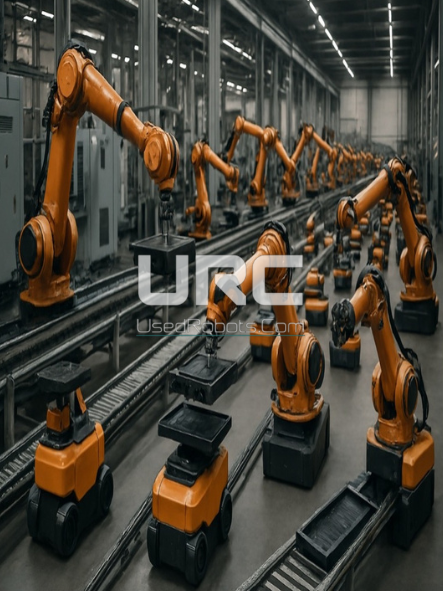
Swarm robotics, inspired by the behavior of social insects, is no longer just a laboratory concept—it’s becoming a practical solution in industries such as logistics, construction, and advanced manufacturing. This approach enables multiple robots to work together in a decentralized manner, tackling tasks that once required complex centralized systems.

The Essence of Swarm Robotics

Unlike traditional automation systems, where each robot is controlled by a central unit, swarm robotics relies on distributed autonomy. Each robot follows simple rules, but collectively they generate intelligent, adaptive behavior that responds in real time to changing conditions. This makes swarm robotics ideal for dynamic environments like warehouses or assembly lines, where constant variation is the norm.

Breakthroughs in Research

One of the most notable recent developments is RoboBallet, a project led by University College London (UCL) in collaboration with Google DeepMind. It coordinates up to eight robotic arms to perform 40 tasks within seconds. Using AI algorithms, the system prevents collisions and optimizes group movements—marking a milestone in multi-robot planning.

Other programs, such as Centibots and Symbrion, have long demonstrated that simple robots can self-organize to explore spaces, transport objects, or even assemble into cooperative structures. Backed by research institutions in the U.S. and Europe, these initiatives laid the groundwork for today’s industrial swarm robotics.

Emerging Industrial Applications

The automotive industry is among the first to embrace this paradigm. Companies like Arrival have documented assembly processes where groups of robots simultaneously build electric vehicles—eliminating the need for a static production line. This approach offers greater flexibility, lower costs, and adaptability for small or customized production runs.

In logistics, large warehouses are experimenting with fleets of mobile robots that self-organize to move goods more efficiently than traditional systems. The key lies in their independence: each robot makes local decisions that, together, result in a coordinated and seamless operation.

Swarm robotics is reshaping the landscape of industrial automation. What began as an experimental concept inspired by insect behavior has evolved into a practical model that enhances resilience, flexibility, and efficiency in factories and logistics centers.

Advances in AI, inter-robot communication, and distributed planning are driving adoption in strategic sectors like automotive and logistics. In the coming years, we’ll witness mass production shift toward dynamic networks of collaborative robots—capable of operating as a self-sufficient, adaptive swarm.

FROM THE FACTORY TO THE SMART ECOSYSTEM: THE RISE OF ROBOTIC SWARMS Read More »

AUTOMATION IN MOTION: STRATEGIC USES OF AMR IN INDUSTRY 4.0

In the era of intelligent automation, autonomous mobile robots (AMRs) have transitioned from a futuristic vision to becoming key components of modern industrial operations. Unlike automated guided vehicles (AGVs), AMRs do not require fixed infrastructure such as magnetic tapes or predefined routes, allowing them to adapt in real-time to environmental changes using sensors, cameras, LIDAR, and advanced navigation algorithms.

Their ability to collaborate with human workers and other technologies has driven their integration across various sectors, particularly in manufacturing, logistics, pharmaceuticals, and retail. Below, we review five key applications where autonomous mobile robotics are transforming workflows with efficiency, safety, and flexibility.

Material Transport in Manufacturing Environments One of the most widespread uses of AMRs is the internal transport of raw materials, parts, and semi-finished products between workstations. Unlike fixed production lines, AMRs enable flexible and dynamic distribution, adapting to changes in layout or production demand. For example, automotive manufacturers use fleets of AMRs to supply assembly cells just-in-time (JIT), optimizing delivery times and reducing work-in-process inventory.

Automatic Inventory Replenishment in Smart Warehouses In modern logistics centers, AMRs perform replenishment tasks by detecting low stock levels in picking or production areas. Equipped with cloud-connected inventory management systems, the robots can identify which products need restocking and from which location to retrieve them. This functionality is crucial for high-turnover e-commerce operations, where inventory efficiency directly impacts customer responsiveness.

Human-Robot Collaboration in Picking Operations Thanks to artificial vision and autonomous navigation, many AMRs are designed to work alongside human operators in collaborative picking tasks. The robot handles movement and container transport, while the worker picks the products. This approach reduces physical strain on staff, minimizes errors, and speeds up order preparation, especially in warehouses with a wide variety of items.

Internal Deliveries in Hospitals and Pharmaceutical Centers In critical environments like hospitals, AMRs transport medications, biological samples, food, or sterilized clothing between departments without disrupting clinical activity. Their ability to navigate crowded corridors and avoid obstacles makes them ideal for repetitive and sensitive tasks. Additionally, by reducing human contact in certain transfers, AMRs help lower the risk of cross-contamination or medication delivery errors.

Industrial Waste Management and Recycling AMRs are also used for selective waste collection within industrial plants, where they can identify different types of waste (metals, plastics, paper) and transport them to recycling points. Using IoT sensors, some models even monitor container fill levels to optimize collection routes. This application not only improves waste management efficiency but also strengthens companies’ sustainability and regulatory compliance goals.

Technology with Purpose: A Commitment to Efficiency, Safety, and Workplace Well-being The integration of autonomous mobile robots into production chains goes beyond technological improvement: it represents an investment in operational sustainability, workplace safety, and the dignification of human roles in the sector. By taking on monotonous, hard, or high-risk responsibilities, AMRs allow employees to focus on strategic, creative, and supervisory tasks where human judgment is indispensable. This not only enhances work quality but also reduces fatigue, incidents, and job dissatisfaction. In a scenario where industrial competitiveness demands constant agility and adaptability, AMRs are not a trend but an essential tool for building smarter, more resilient, and human-centric factories.

AUTOMATION IN MOTION: STRATEGIC USES OF AMR IN INDUSTRY 4.0 Read More »

Scroll to Top