Search
Close this search box.
Used Robots Logo
autonomous robots Archives - Used Robots

autonomous robots

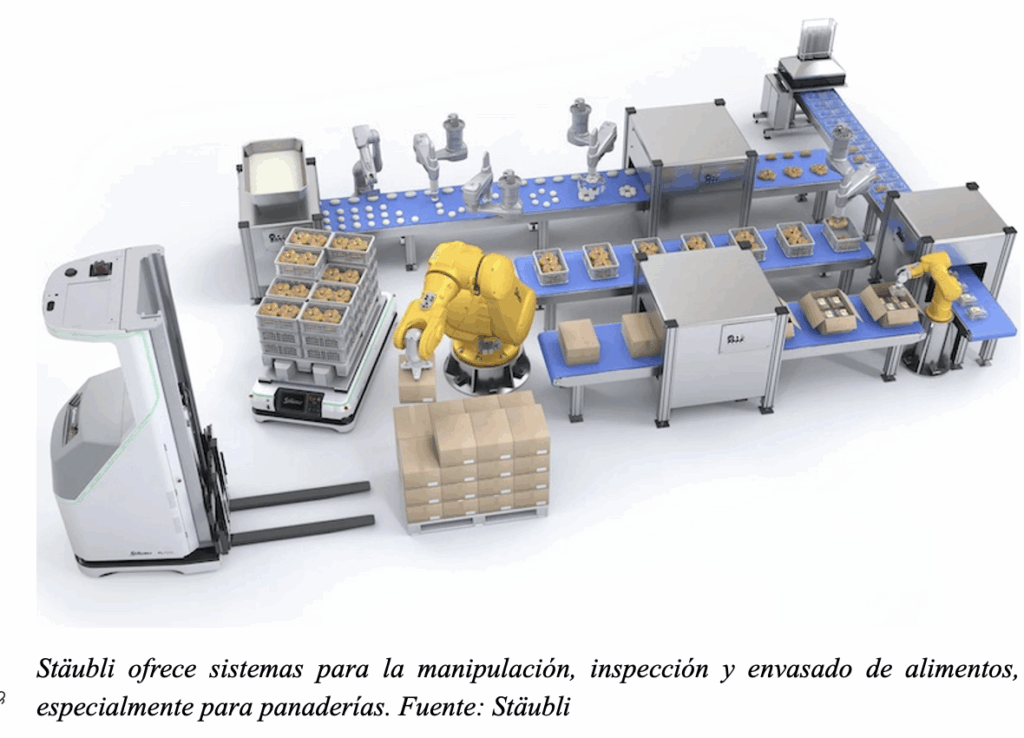
BEYOND THE OVEN: ROBOTICS REVOLUTIONISES INSPECTION AND HANDLING IN BAKERIES

In today’s increasingly competitive industrial landscape, gantry robots—also known as Cartesian robots—are emerging as one of the most versatile and efficient solutions for automation. Unlike articulated or SCARA robots, gantry systems are mounted on elevated structures that move across the workspace. This configuration allows them to handle parts with high precision, cover large surface areas, and free up valuable floor space.
These robots are widely used across various industries for material handling, pick-and-place operations, assembly, dispensing, sealing, and welding tasks within production lines. Their elevated positioning makes them especially suitable for sectors such as automotive, where they manage heavy components, feed welding stations, or transfer parts between lines; aerospace, where they handle large-scale components requiring accuracy and repeatability; consumer goods, where they streamline packaging, palletizing, and order preparation; and smart logistics, where they efficiently sort and move goods in tight spaces.
One of the key advantages of gantry robots lies in their ability to optimize space. Operating from above, they eliminate the need for floor-mounted equipment, which is crucial in facilities with physical constraints. Their adaptability is another strength—they can be equipped with a wide range of end effectors, such as grippers, welders, or suction cups, to suit different applications. In terms of performance, they help reduce cycle times, minimize human error, and boost overall line productivity. Their elevated reach also enables access to areas that ground-mounted robots simply cannot cover.
While articulated robots dominate the market for their flexible movement and SCARA robots excel in high-speed repetitive tasks, gantry systems stand out in large-scale operations that require long, linear travel. Articulated robots often take up floor space and face limitations in reach, whereas gantry robots offer superior spatial efficiency and coverage across expansive work zones.

Companies like URC, based in Bilbao, bring valuable expertise in supplying refurbished industrial robots and complete cells that integrate peripherals such as linear tracks, positioners, and welding systems. Their facilities often showcase robots moving along linear guides—a concept closely aligned with gantry systems. Moreover, their thorough inspection of axes, wrists, and calibration ensures the precision required for applications where linear motion is critical.
This level of know-how in advanced automation and robotic cells demonstrates how gantry systems, when paired with high-quality refurbished robots, can become an accessible and strategic solution for companies aiming to maximize space, reduce cycle times, and enhance productivity without compromising on accuracy.

BEYOND THE OVEN: ROBOTICS REVOLUTIONISES INSPECTION AND HANDLING IN BAKERIES Read More »

FROM THE FACTORY TO THE SMART ECOSYSTEM: THE RISE OF ROBOTIC SWARMS

Swarm robotics, inspired by the behavior of social insects, is no longer just a laboratory concept—it’s becoming a practical solution in industries such as logistics, construction, and advanced manufacturing. This approach enables multiple robots to work together in a decentralized manner, tackling tasks that once required complex centralized systems.

The Essence of Swarm Robotics

Unlike traditional automation systems, where each robot is controlled by a central unit, swarm robotics relies on distributed autonomy. Each robot follows simple rules, but collectively they generate intelligent, adaptive behavior that responds in real time to changing conditions. This makes swarm robotics ideal for dynamic environments like warehouses or assembly lines, where constant variation is the norm.

Breakthroughs in Research

One of the most notable recent developments is RoboBallet, a project led by University College London (UCL) in collaboration with Google DeepMind. It coordinates up to eight robotic arms to perform 40 tasks within seconds. Using AI algorithms, the system prevents collisions and optimizes group movements—marking a milestone in multi-robot planning.

Other programs, such as Centibots and Symbrion, have long demonstrated that simple robots can self-organize to explore spaces, transport objects, or even assemble into cooperative structures. Backed by research institutions in the U.S. and Europe, these initiatives laid the groundwork for today’s industrial swarm robotics.

Emerging Industrial Applications

The automotive industry is among the first to embrace this paradigm. Companies like Arrival have documented assembly processes where groups of robots simultaneously build electric vehicles—eliminating the need for a static production line. This approach offers greater flexibility, lower costs, and adaptability for small or customized production runs.

In logistics, large warehouses are experimenting with fleets of mobile robots that self-organize to move goods more efficiently than traditional systems. The key lies in their independence: each robot makes local decisions that, together, result in a coordinated and seamless operation.

Swarm robotics is reshaping the landscape of industrial automation. What began as an experimental concept inspired by insect behavior has evolved into a practical model that enhances resilience, flexibility, and efficiency in factories and logistics centers.

Advances in AI, inter-robot communication, and distributed planning are driving adoption in strategic sectors like automotive and logistics. In the coming years, we’ll witness mass production shift toward dynamic networks of collaborative robots—capable of operating as a self-sufficient, adaptive swarm.

FROM THE FACTORY TO THE SMART ECOSYSTEM: THE RISE OF ROBOTIC SWARMS Read More »

Scroll to Top