
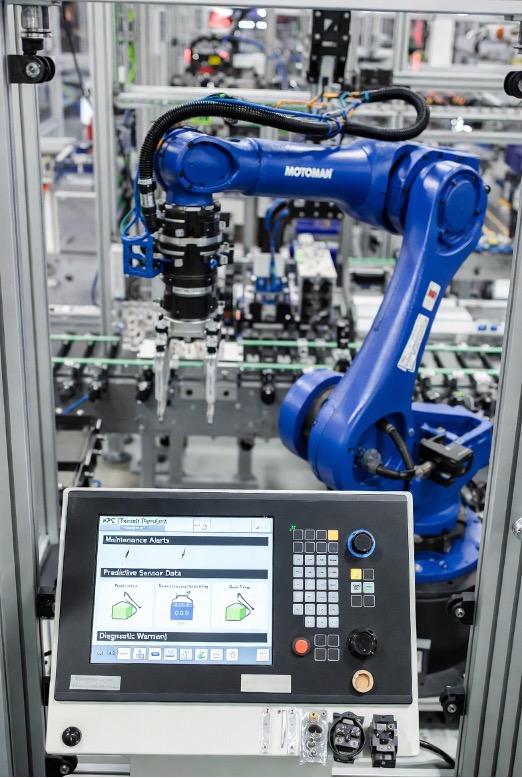
WHAT STRATEGIES EXIST TO MINIMIZE DOWNTIME WHEN INTRODUCING ROBOTIC AUTOMATION INTO CONTINUOUS PROCESSES?
When robots become an essential part of operational workflows, unplanned downtime can become one of the most significant sources of productivity loss in automated plants.
System errors, unexpected stoppages, and urgent repairs can delay deliveries and create costly disruptions that negatively affect competitiveness.
Implementing strategies that minimize these downtime events and maximize the operational availability of your robotic systems is crucial.
In this article, we outline the most effective, technically validated practices that help ensure your automation runs continuously and reliably.
👉 Complementary real article from Eurobots on industrial robot maintenance and operation:
HOW TO KEEP AN INDUSTRIAL ROBOT IN OPTIMAL CONDITION
1. Implement a Preventive Maintenance Program
A well‑structured preventive maintenance plan allows you to inspect, calibrate, and replace components before they fail.
Industrial studies show that preventive maintenance can:
Reduce unexpected downtime by 50–75%
Extend the service life of critical components
Lower the costs associated with unplanned repairs
This includes routine checks of lubrication, sensors, motors, and control systems according to the manufacturer’s recommendations and the robot’s actual operational usage.
2. Integrate Data‑Driven Predictive Maintenance
Unlike preventive maintenance (based on time or usage intervals), predictive maintenance uses real‑time data from sensors and equipment status to anticipate failures before they occur.
Technical sources highlight that this approach enables:
Maintenance performed right before it becomes necessary
Turning unexpected stops into planned interventions
Optimizing plant availability in real time
Industrial IoT technologies and data analytics allow detection of degradation trends and help plan service actions without interrupting production.
3. Continuous Training for Technical Staff and Operators
Human expertise remains a key element. A well‑trained team can:
Detect early signs of failure before they escalate into stoppages
Respond quickly to system alarms
Perform basic preventive maintenance without external technicians
Technical training should include fault diagnosis, robot parameter updates, and sensor signal analysis.
4. Spare Parts Management and Internal Logistics
Many prolonged downtime events are caused by the lack of critical spare parts or delays in repair logistics.
An effective strategy includes:
Proper stock of high‑wear components
Classification of spare parts by criticality
Optimized replacement procedures
URC recommends maintaining a minimum inventory of consumables and components with the highest operational wear.
5. Using Integrated Diagnostics and Monitoring Systems
Modern robotic systems include diagnostic tools that:
Monitor operating conditions
Log errors and significant events
Send alerts before major failures
This type of monitoring allows plant managers to anticipate trends and schedule maintenance ahead of time.
6. Designing Systems with Operational Redundancy
In critical applications, redundancy may include:
Backup robots or duplicated modules
Automatic switching systems
Alternative paths within production flows
While this requires a higher initial investment, it significantly reduces the impact of failures in single system elements.
❓ FAQs
What causes most downtime in robotic automation?
The most common causes include mechanical failures, software errors, lack of maintenance, and unavailable spare parts.
How impactful can well‑implemented predictive maintenance be?
It can convert most unexpected stoppages into planned downtime, increasing system availability and reducing total maintenance costs.
Is it expensive to implement these strategies?
Smart maintenance investments are often quickly offset by reduced downtime, longer equipment lifespan, and significantly improved overall productivity.
Checklist to Minimize Downtime
☐ Implement a preventive maintenance plan
☐ Integrate predictive maintenance with data analytics
☐ Train technical staff and operators
☐ Ensure inventory of critical spare parts
☐ Connect diagnostic and monitoring systems
☐ Evaluate operational redundancy for critical processes