
INDUSTRIAL ROBOTICS TRENDS FOR 2026: INTELLIGENCE, MOBILITY & SUSTAINABILITY
INDUSTRIAL ROBOTICS TRENDS FOR 2026: INTELLIGENCE, MOBILITY & SUSTAINABILITY Read More »

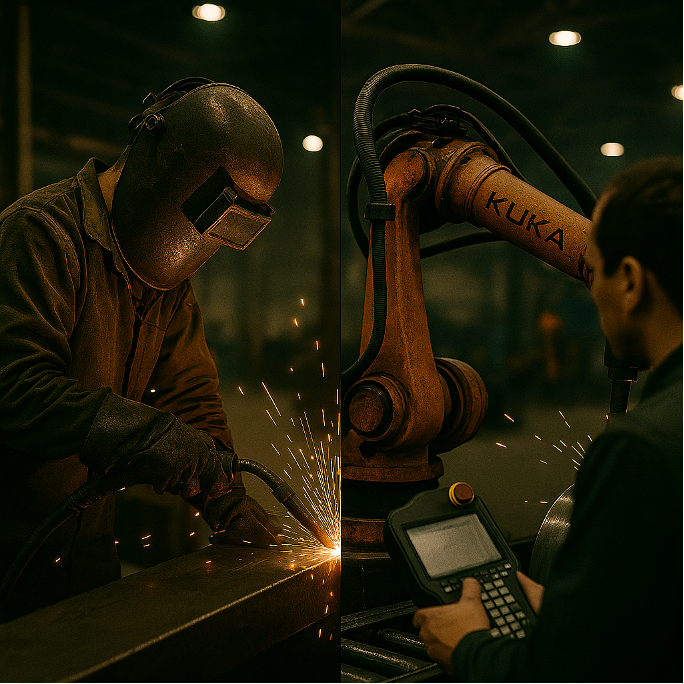
Ergonomics is not about comfort — it is industrial survival. In daily plant operations, behind every welded, sanded, polished, lifted, or manually handled part, there is an invisible truth: the human body absorbs tension, weight, heat, vibration, repetition, and risk. Ergonomics is not a corporate luxury; it is a technical requirement and the science that
When discussing automation, one question inevitably arises: “How long will the line be down?” This is not a matter of technical curiosity—it’s a reflection of real pressure. Production is at stake, customers are waiting, shifts are scheduled, and people are watching the calendar. Commissioning is not just another project phase; it is a critical moment
HOW LONG DOES IT REALLY TAKE TO COMMISSION A ROBOTIC CELL? Read More »

The Global Trend Toward Accessible Automation The industry is undergoing an interesting shift: many companies are automating processes using refurbished industrial robots because they deliver the same level of functionality for a wide range of applications—especially in cases where cutting-edge technology is not essential. This trend is evident in sectors such as automotive, metalworking, plastics,
High-Impact Applications That Work Perfectly with Refurbished Robots Read More »

In many plants, welding doesn’t start from scratch: there are already tables, positioners, welding power sources, tooling, extraction systems and, in some cases, software or manual stations that have been in place for years. It’s only natural to wonder: can a refurbished robot be integrated into that environment without having to replace everything? The industrial

In many workshops, the dilemma arises over whether to purchase a new robot or upgrade the one already installed. Thanks to advancements in controllers, sensors, software, and mechatronics, older components can be brought back to life effectively. The key is knowing when refurbishment makes sense and when it’s time to invest in new equipment. Why

For years, industrial automation seemed to be the exclusive realm of large conglomerates. However, the market for refurbished robots is changing that, especially in Latin America, where manufacturing SMEs are striving for efficiency without making multi-million investments. Traditionally, tasks such as mould manufacturing, welding structures, or handling parts on production lines require high precision, but
REAL CASES IN LATIN AMERICA: HOW SMES CUT COSTS WITH REFURBISHED ROBOTS Read More »

For decades, industrial maintenance relied on two straightforward principles: repair when something fails or perform scheduled inspections. Today, Artificial Intelligence is transforming this paradigm. Thanks to real-time data analysis, robots can anticipate failures before they occur, optimise their performance, and extend their operational lifespan. What’s more, this technology isn’t limited to new robots: it can also be applied to refurbished industrial robots, combining sustainability with operational intelligence.
Predictive maintenance powered by AI is based on gathering sensor data—such as vibration, temperature, electrical consumption, and motor torque—and analysing it with algorithms that detect anomalous patterns. If a shaft overheats or a gearbox vibrates slightly outside its normal range, the system issues an alert before the issue causes a breakdown. This enables interventions to be planned at the ideal time, reducing costs and avoiding unexpected downtime.
Leading manufacturers like ABB, KUKA, FANUC, and Yaskawa have developed platforms compatible even with refurbished robots equipped with modern controllers. For instance, a refurbished ABB robot with an IRC5 system can connect to the ABB Ability™ cloud platform for remote monitoring and mechanical health analytics. KUKA provides solutions compatible with KUKA Connect, enabling performance data logging and automatic maintenance scheduling. Even FANUC and Yaskawa offer APIs that, when paired with additional sensors, transform refurbished robots into intelligent units capable of generating predictive reports.
Integrating AI into refurbished robots doesn’t just extend their lifespan; it also maximises return on investment. By detecting faults early, costly repairs are minimised and production stoppages—which can cost thousands of euros per hour—are avoided. Furthermore, the accumulated data enables engineers to improve trajectory programming, optimise energy use, and compare performance between different cells.
A real-world example comes from an automotive plant in Italy, where three refurbished KUKA KR 60 robots fitted with vibration sensors and a local AI system detected micro-wear in gearboxes within six months, preventing a complete line stoppage. In another case, a Polish electronics factory using a refurbished ABB IRB 4600 with predictive diagnostics software reduced maintenance times by 25% and extended its expected operational cycle by over two years.
These experiences show that refurbished robots can not only match but even surpass the efficiency of new ones when combined with artificial intelligence and advanced monitoring. The key lies in integration: strategically placed sensors, secure connectivity, and continuous analysis.
From a sustainability perspective, this evolution also has a positive environmental impact. Extending a robot’s lifespan by five years means avoiding the production of a new one, saving thousands of kilos in materials and energy. Properly applied AI makes refurbished robotics a model for the digital circular economy: reused technology with an updated brain.
At URC, we integrate predictive maintenance solutions and smart connectivity into refurbished ABB, KUKA, FANUC, and Yaskawa robots, ensuring precision, reliability, and long service life. We combine engineering and data so each robot works more intelligently, efficiently, and sustainably.

Buying a robot is not simply a technical decision. In reality, it is a financial one. Many companies believe that the most expensive robot is the best, or that it is safer to buy new to “avoid risks”. However, when analysed from a business perspective, with numbers and strategy, the reality is quite different: what matters is not the purchase price, but the total cost of ownership (TCO). And from this point of view, a refurbished industrial robot is not only competitive—it is, in many cases, the smartest choice.
The TCO is the actual cost of owning a robot over its entire useful life. It includes not just the purchase price, but also installation, spare parts, maintenance, energy consumption, unplanned downtime, training, integration, and remaining useful life. Many companies are surprised to discover that a refurbished robot can have a TCO up to 50% lower than a new one, with the same productive performance.
Why does this happen? Firstly, because a new robot includes an upfront premium related to brand, marketing, and technological depreciation. A new ABB IRB 4600 or KUKA KR 60 can cost two or even three times more than their certified refurbished versions, even though operationally, the practical difference is minimal for typical industrial tasks such as welding, palletising, machining, handling, or inspection.
Moreover, a certified refurbished robot has already overcome its initial failure curve. In other words, it has already “proven” its mechanical and electrical stability in production. During refurbishment, gearboxes are adjusted, cables and seals are replaced, lubrication is renewed, motors are tested, and axes are precisely calibrated. The result? With proper preventive maintenance, it can continue working reliably for another 8 to 12 years.
Then there is the cost of time. Many factories lose money due to automation delays. A new robot may take months to be delivered, especially during periods of high global demand. Refurbished robots, on the other hand, are available immediately. Being able to start an automation project four months earlier has a real financial impact, as it accelerates return on investment and reduces dependence on scarce labour.
There is also a factor few companies consider: refurbished robots allow for progressive scalability. Instead of buying five new robots and restructuring the entire line, a smart plant can start with just one refurbished FANUC M-20iA or Yaskawa GP12, automate a critical operation, quickly recover the investment, and reinvest. This approach reduces financial risk and lets you refine the project step by step, without blind bets or unnecessary debt.
TCO also depends on the ecosystem. A new robot often requires new spare parts, mandatory support contracts, and sometimes more expensive proprietary software. By contrast, refurbished industrial robots have a global market for spare parts, are compatible with standard accessories (grippers, rotary tables, sensors), and many allow integration with Siemens, Rockwell, or Beckhoff PLCs without barriers.
In summary, when a plant manager, financial director or business owner truly evaluates the investment, the question is no longer: “New or used?”, but rather: “Which option gives me more productivity per euro invested?” And by that metric, the certified refurbished robot wins.
Because it is not about spending more, but about investing better.
At URC, we help companies of all sizes reduce their TCO through smart automation with refurbished ABB, KUKA, FANUC, and Yaskawa robots. Each robot is delivered tested, certified, and ready for production. We speak the language of factories: productivity, reliability, and return on investment.
In today’s increasingly competitive industrial landscape, gantry robots—also known as Cartesian robots—are emerging as one of the most versatile and efficient solutions for automation. Unlike articulated or SCARA robots, gantry systems are mounted on elevated structures that move across the workspace. This configuration allows them to handle parts with high precision, cover large surface areas, and free up valuable floor space.
These robots are widely used across various industries for material handling, pick-and-place operations, assembly, dispensing, sealing, and welding tasks within production lines. Their elevated positioning makes them especially suitable for sectors such as automotive, where they manage heavy components, feed welding stations, or transfer parts between lines; aerospace, where they handle large-scale components requiring accuracy and repeatability; consumer goods, where they streamline packaging, palletizing, and order preparation; and smart logistics, where they efficiently sort and move goods in tight spaces.
One of the key advantages of gantry robots lies in their ability to optimize space. Operating from above, they eliminate the need for floor-mounted equipment, which is crucial in facilities with physical constraints. Their adaptability is another strength—they can be equipped with a wide range of end effectors, such as grippers, welders, or suction cups, to suit different applications. In terms of performance, they help reduce cycle times, minimize human error, and boost overall line productivity. Their elevated reach also enables access to areas that ground-mounted robots simply cannot cover.
While articulated robots dominate the market for their flexible movement and SCARA robots excel in high-speed repetitive tasks, gantry systems stand out in large-scale operations that require long, linear travel. Articulated robots often take up floor space and face limitations in reach, whereas gantry robots offer superior spatial efficiency and coverage across expansive work zones.
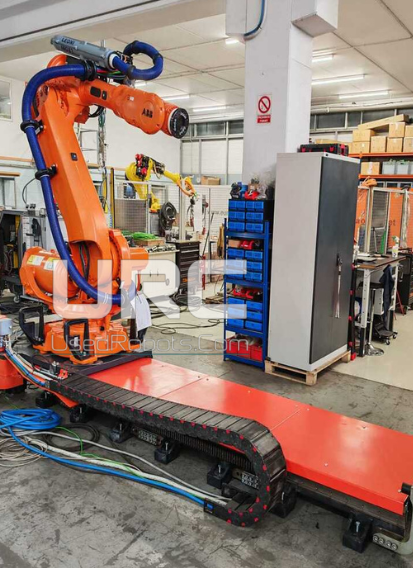
Companies like URC, based in Bilbao, bring valuable expertise in supplying refurbished industrial robots and complete cells that integrate peripherals such as linear tracks, positioners, and welding systems. Their facilities often showcase robots moving along linear guides—a concept closely aligned with gantry systems. Moreover, their thorough inspection of axes, wrists, and calibration ensures the precision required for applications where linear motion is critical.
This level of know-how in advanced automation and robotic cells demonstrates how gantry systems, when paired with high-quality refurbished robots, can become an accessible and strategic solution for companies aiming to maximize space, reduce cycle times, and enhance productivity without compromising on accuracy.
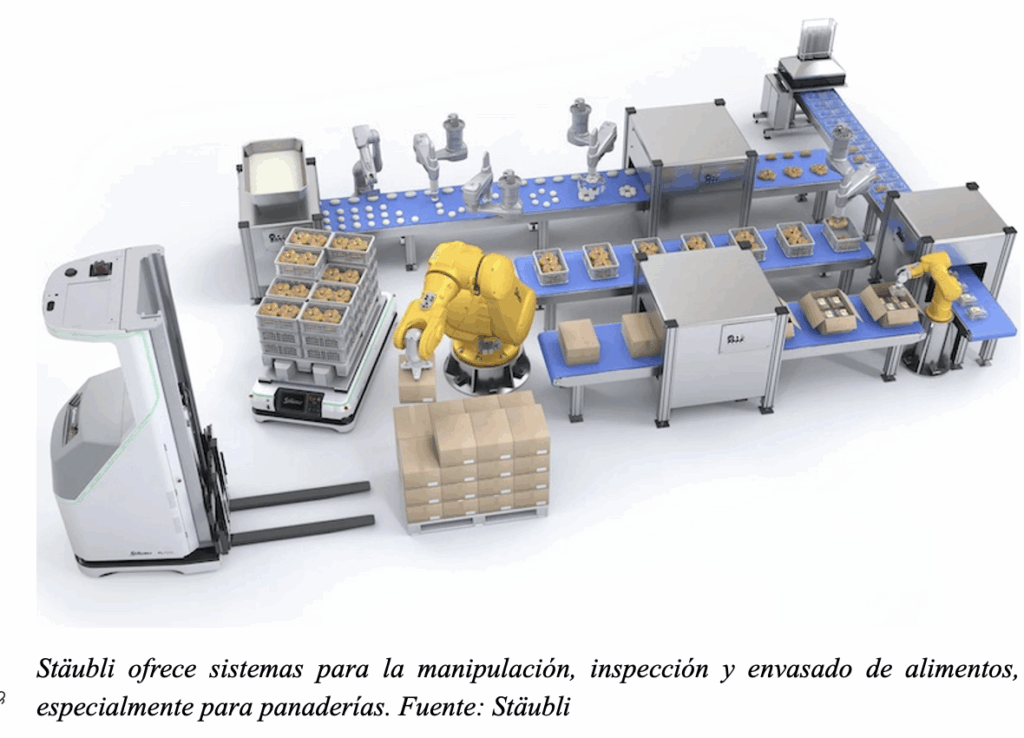
BEYOND THE OVEN: ROBOTICS REVOLUTIONISES INSPECTION AND HANDLING IN BAKERIES Read More »